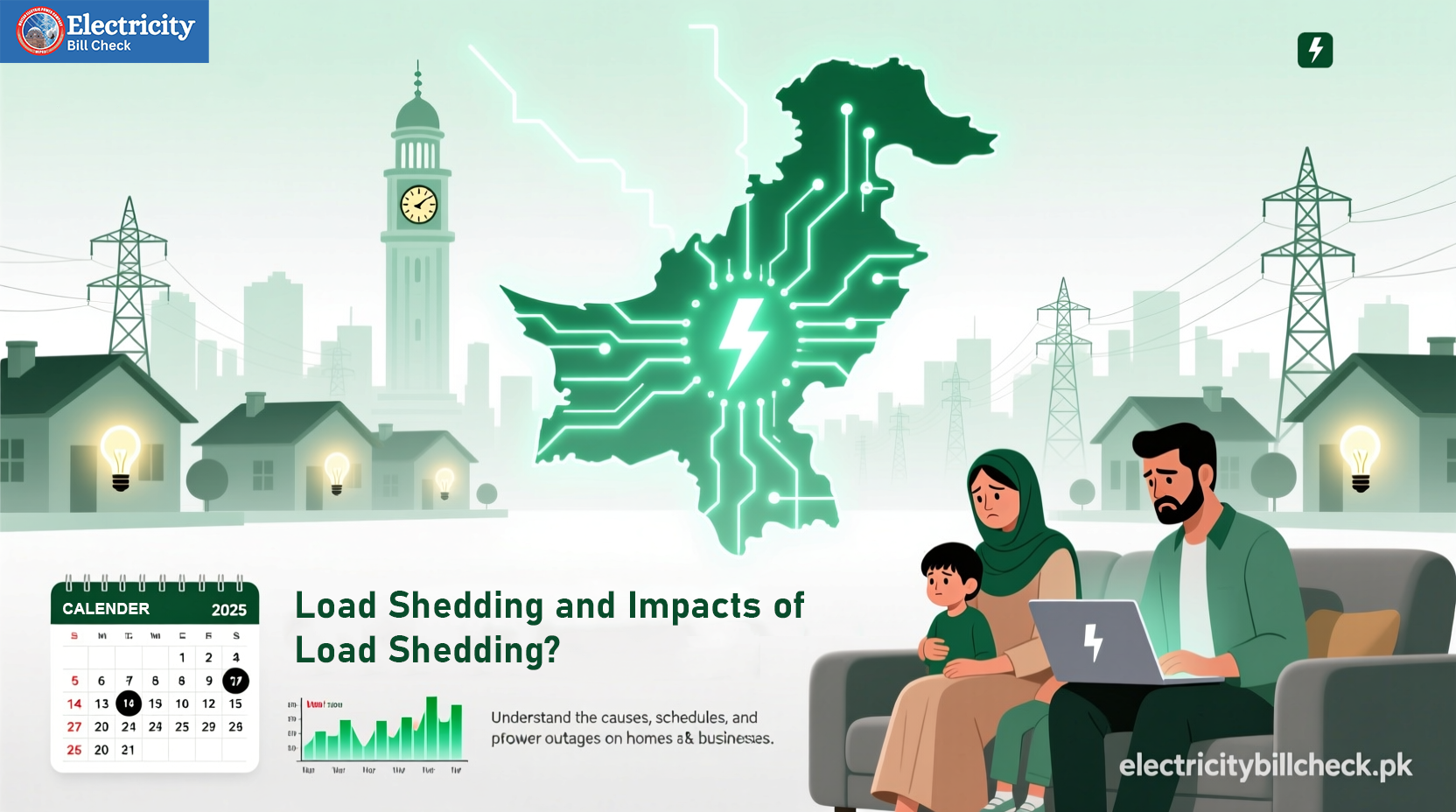
Load Shedding and Impacts of Load Shedding?
Power load shedding causes heavy troubles for the energy sector of Pakistan; it cuts across daily activities, economic activities, and the overall growth trajectory of the country. Load shedding is a controlled, temporary process whereby part of the electric power supply is cut off from certain areas when electricity demand is in excess of supply. Load shedding prevents a complete collapse or failure of the power grid by reducing load on the generation and transmission systems.
In Pakistan it occurs frequently due to constraints and high consumption caused by infrastructure, becoming an increasingly common phenomenon among residential and commercial consumers. It refers to scheduled or unplanned amounts of power cuts used as methods of stabilizing the network during peak loads or technical faults. It is very much expected to last until Pakistan improves its capacity in power generation and distribution significantly. Understanding what it means can assist consumers in preparing for outages and optimizing energy usage while preparing for them.
Reasons for Load Shedding in Pakistan
There are many factors related to such as:
- Low electricity generation compared to the increasing demand from the population and industrial scenarios
- Technical losses in the transmission and distribution networks are majorly factors in the inefficiencies and theft of power.
- Shortages in energy resources, such as interruptions in fuel supply for power plants
- Maintenance needs for the aging power infrastructure to prevent its breakdown.
- Unstable, rapid urbanization resulting in increased electricity consumption and confused infrastructure scaling
- Weather-related disruptions are affecting hydropower and thermal plants.
- Thus, all these factors result in a continuous gap between electricity supply and demand, which forces the utility companies to introduce a scheduled policy to avoid blackouts.
What is the load shedding schedule?
This is a timetable for planned power cuts published by the government or the utility to consumers in a specific area. It allows individuals, businesses, and industries to plan their activities around anticipated cuts. Pakistan regularizes the load shedding schedules released by power distribution companies, giving bad areas and hours of power stoppage, and sometimes includes the reason for outages, such as maintenance or high demand. These schedules are often updated as conditions on the supply change. Accessing this in good time helps reduce inconvenience and allows users to plan for contingencies in advance.
MEPCO Load Shedding Schedule Understanding
The MEPCO load shedding schedule covers the Southern Punjab districts of Multan, Bahawalpur, Dera Ghazi Khan, and surrounding areas. MEPCO issues specific daily and weekly schedule load shedding information, based on feeder areas and grid stations. Typical MEPCO schedules indicate 2-8 hours of power cuts depending on load management requirements. These schedules are available on MEPCO’s official website and customer service centers. Consumers can use the schedule to know the electricity shutdown affecting their locality in Pakistan today. MEPCO also gives emergency contact numbers for complaints related to unauthorized longer outages.
KE Load Shedding Schedule
Karachi Electric (KE) is in charge of the electricity supply to Karachi, while it also caters to some parts of Hyderabad. The KE load-shedding schedule has been made to bring the grid into a stable position by dividing the city into zones and imposing controlled load shedding. KE announces schedules indicating the timing and affected areas with details on preventive outages for equipment repairs and maintenance. The target is to minimize the impact by rotating power cuts fairly across areas. KE communicates unplanned outages related to system failures through social media and helpline services in case of emergencies. Residents rely on the load shedding schedule published by KE in planning their day-to-day activities amid power shortages.
Daily Electricity Shutdown in Pakistan Today
Due to today’s increasing demand against limited electricity generation, a large part of Pakistan faces electricity shutdown for hours at a stretch. The situation worsens in summer when the demand for air conditioners doubles in the US compared to other seasons. These daily power cuts disturb household schedules, affect small-scale businesses, and lessen productivity. Keeping updated with load shedding schedules is a critical element for consumers in adjusting as well as minimizing inconveniences caused by these continuing blackouts of electricity.
Load Shedding Effects on Households
There are many difficulties for households caused by it. Most essential appliances, such as refrigerators, fans, and cooking devices, fail to run, causing discomfort and leading to food spoilage. Disruption of the internet and communication services has led to poor remote work and education. Health hazards for the aged and patients who depend on electrically powered medical equipment. High expenses due to dependence on alternative power sources, such as generators and inverters, increasing fuel consumption, and pollution. It becomes important with respect to household planning because families often arrange important jobs around known outage timings.
The Effects on Business and Industry
Considerable financial losses were incurred due to this in Pakistan:
- Recurrent cuts shut down the production lines, causing delays followed by reduced output.
- Sensitive machinery is ruined by the sudden disconnection of power, leading to repair expenses.
- Increased costs of operation due to employing diesel generators.
- Electricity density for service-oriented sectors, such as retail, banking, and hospitality, suffers when the electricity supply becomes erratic.
Electricity Shutdowns Across Pakistan
Power outages are being witnessed across most areas of Pakistan today due to increasing demand and underperforming electricity generation. These outages tend to last for several hours, one after the other. Summers heighten this scenario as the usage of air-conditioners skyrockets. Daily power interruptions cause disruptions to household life, interfere with small businesses, and detract from productivity. Consumers are advised to keep informed through regularly updated schedules with load shedding schedules to adjust their lifestyles and minimise inconvenience due to pervasive power stoppages.
Conclusion
Load shedding is a recurring problem that arises because of a structural mismatch between the supply of electricity in Pakistan and the emerging demand. For example, companies such as MEPCO and KE need to be accessed to manage the daily activities around the blackout times. The family, business, education, and health impacts from load shedding are really significant; however, both government and private sector efforts do provide the hope of a stable, reliable grid in the near future. Being informed about Pakistan today, and energy-wise choices can minimise the discomfort while the nation works towards more sustainable power solutions.
FAQs