Electricity Disconnection and Reconnection
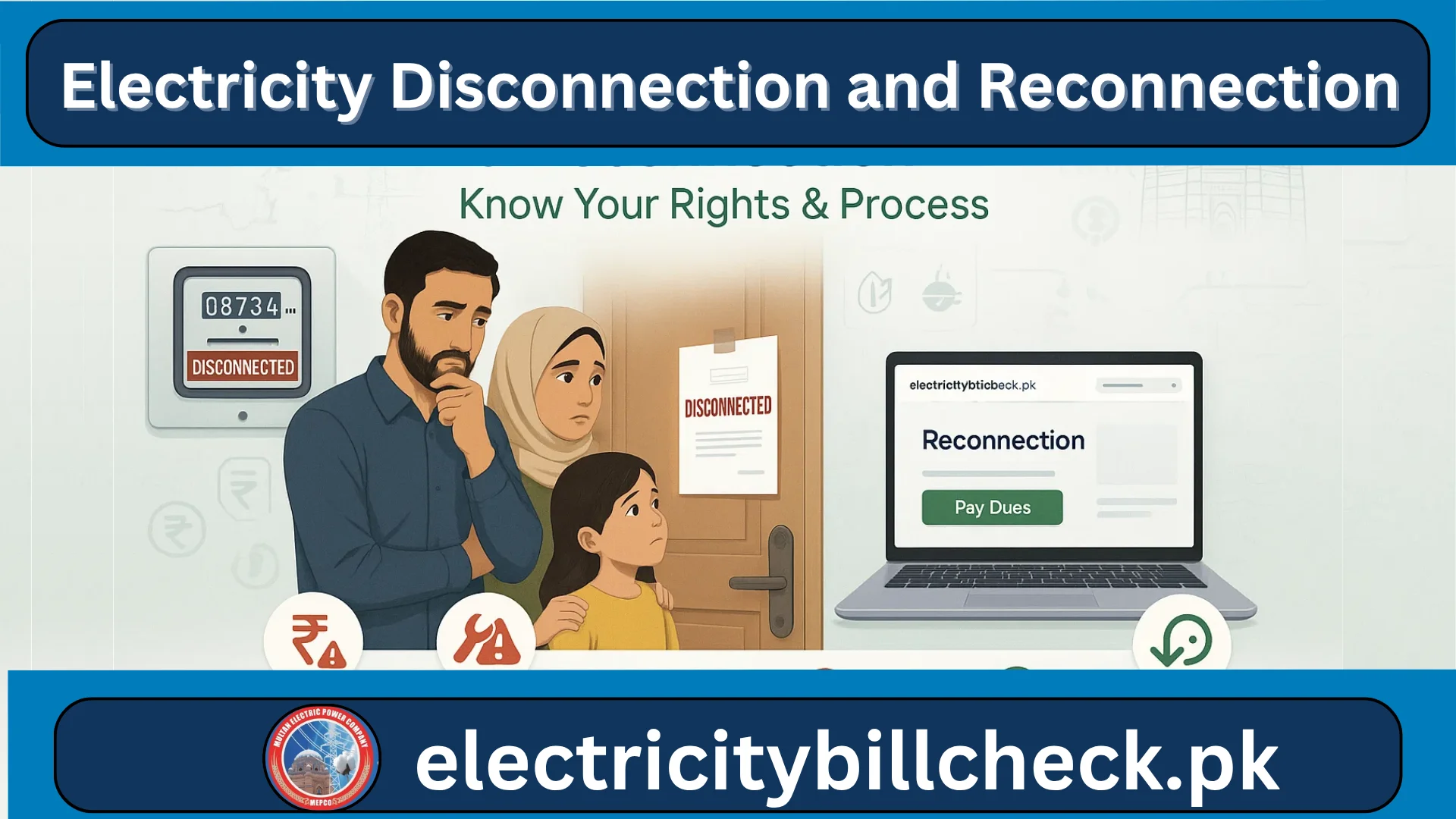
Electricity Disconnection and Reconnection are strictly regulated processes in the power sector of Pakistan, maintaining balance between the utility providers in terms of ensuring payment compliance and the consumer’s rights and safety. Reasons for disconnection are mainly bill default, meter tampering, and safety issues. Reconnection is restoring power after dues are either resolved or after making an application for reconnection subsequent to a temporary or permanent cut-off. All processes adhere strictly to the Meter Disconnection Rules issued by NEPRA (National Electric Power Regulatory Authority) and Power Division, which ensures that the entire process is fair, transparent, and protective of consumer rights. Recent reforms have been made regarding proper timing in issuing warning notices, greater clarity in bills, and advances in technology being harnessed to enhance service quality and reduce disputes.
Causes of Electricity Disconnection and Reconnection
Some of the major drivers of Electricity Disconnection include:
Non-payment of electricity bills: bills are to be paid by consumers on the due date. If they are unpaid, supplies are forewarned via formal notices. Disconnection occurs typically after a long period of nonpayment, often after two months.
Electricity theft or meter tampering: Illegal connections, bypassing of meters, or tampering with metering equipment lead to immediate disconnection and legal action.
Safety hazards: Faulty wiring, transformer deficiencies, or dangerous electrical installations could involve disconnection to avert accidents or fires.
Consumer request: A consumer may require Temporary Disconnection for renovation, travel, or property sale, or a permanent cutoff to follow specific rules.
Distribution companies, such as K-Electric, MEPCO, LESCO, etc., have to adhere to these approved protocols with documented notices before taking any disconnection action so that consumers may not face inconvenience.
Meter Disconnection Rules
The recent Meter Disconnection Rule, 2025, issued by Pakistan’s Power Division and NEPRA, has strict rules. Consumers cannot be immediately disconnected for defaulting on one bill; a time is given to settle dues. For consumers defaulting in payment for two consecutive months, a 7-day formal disconnection notice is given via bill inserts, SMS, or physical letters. No disconnection can happen without an official written notice. In cases of theft or tampering with their electricity supply, utilities may immediately disconnect them without informing them. The disconnected users must be fully informed of dues, penalty amounts, and reconnection procedures. Meter Disconnection Rules also regulate the use of multiple meters in a household, prohibiting the addition of any unauthorized second meters to prevent subsidy fraud.
Disconnection Types Temporary and Permanent
Temporary Cut-off
Temporary disconnection can be requested with the intent of avoiding consumption during the absence or interruption of the consumer, for example, for a seasonal business stopping or stopping for a holiday period; the maximum duration is up to 11 months, which could be extended in certain instances with approval. No supply will be provided during that time, and the meter may also be sealed. Consumers must clear all previous bills and pay a fee for temporary disconnection before availing of the facility. Consumers can avoid incurring extra costs or penalties from consumed charging supply.
Permanent Disconnection
Permanent disconnection is requested by the consumer on selling or demolishing a property or enforced by utilities due to long-term non-payment or violations of law. Affidavits, complete clearance of bills, and sometimes removal of the meter by officials of the utility are required. Once disconnected permanently, reactivation may be by application afresh with all dues cleared and payment of a charge for reconnection.
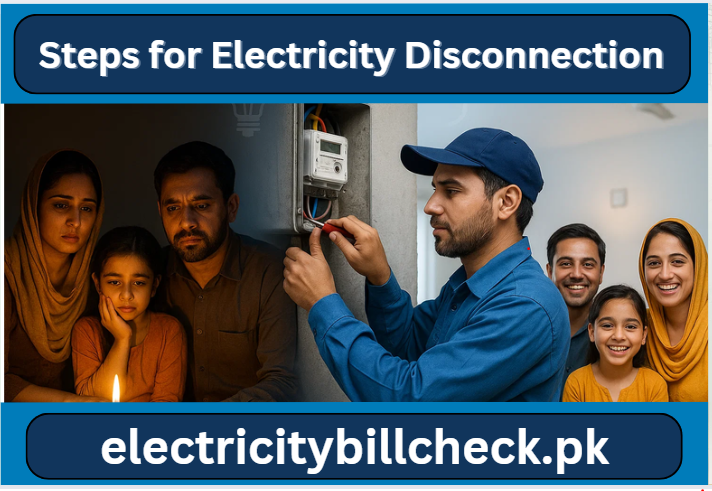
Steps for Electricity Disconnection
The Electricity Disconnection and Reconnection involves nearly all the steps that are very well defined:
Billing and Notice: The consumer receives the bill in a regulated monthly period; in case that bill is unpaid, a follow-up disconnected warning or reminder is issued with the next month’s bill.
Formal disconnection notice: after the omission of at least two billing cycles, a general notice specifying the last date before disconnection is given 7 days before the disconnection itself.
Execution of disconnection: If the dues remain unpaid after the notice, utility field staff disconnects the service physically from outside, sealing or removing the meter.
Documentation: Electricity Disconnection and Reconnection is noted in the records with meter reading, timing, and photographs of the event for legal compliance and consumer records.
Consumer Notification: After disconnecting, the utility informs the customer about the disconnection with a brief description of procedures to be followed for reconnection.
Consumer advocacy and NEPRA oversight ensure that disconnections are justified, documented, and non discriminatory.
Rules on Meter Disconnection Penalties and Charges
Penalties and reconnection fees relate to the total category because it may vary concerning the outstanding amount, classified as
Dues Up to Rs. 5000- Reconnection fee Rs. 500
- Rs. 5001-15,000: Rs. 900
- Rs. 15,001-100,000: Rs. 2000
- Rs. 100,001-500,000: Rs. 2500
- Above Rs. 500,000: Rs. 10000
Non restitution for illegal electricity theft or tempering incurs an additional hefty fine commonly Rs. 2,000 or above and may even attract legal proceedings. In addition, late fees and charges pile up until the complete payment of dues.
Temporary Disconnection Rules and Procedures
Consumers applying for Temporary Disconnection must provide the application with reason for disconnection (travel, renovation, etc.). Receipt of the last bill that has been paid and there are no outstanding dues. Identification and proof of ownership. Fee for temporary disconnection to be paid as prescribed by the utility In a temporary disconnection, the electric power is suspended and meter reading is frozen to prevent billing on unutilized energy. Utilities from time to time remind consumers of the maximum period allowable for a temporary disconnection, which is normally about 11 months after which reconnection is mandatory to continue service.
Electricity Reconnections Stepwise Process
The Electricity Reconnection begins with the consumer:
File for the Reconnection Request: This will involve submitting an application with required documents and proof of payment to the utility local office or online portal.
Clear any dues: The consumer pays all outstanding dues including the bills, penalties, reconnection fees, and deposits for security.
Utility Verification: Utility visits consumer premises to ensure safety, checks meter status, and verifies payment.
Reconnection Authorization: Work order is issued to the technical team for reconnection by Utility.
Supply Restoration: The technician restores service by reconnecting the meter and removing seals from it, if any.
This usually takes a couple of days unless it is prolonged in the case of complex illegal use cases or permanent disconnections.
Rights and Responsibilities of Consumers
Consumer Rights:
- Receive prior written notice regarding disconnection.
- Obtain clear billing information, with dispute resolution.
- Challenge wrongful disconnection in utility forums or NEPRA.
- Protection against unilateral disconnection without due process.
Consumer Responsibilities:
- Pay bills and charges on time.
- Refrain from electricity tampering or theft.
- Timely report defective meters or other billing complaints.
- Adhere to safety and technical norms set by the utility.
Things to Do to Avoid Electricity Disconnection
The first step a consumer can take to avoid disconnection will be to pay their bills by or on the due date, thus avoiding inconveniences of late fees or disruption. If hardship arises, contact the utility at the earliest to negotiate some installments or temporary relief. Go for Temporary Disconnection if you will be away for an extended period. Don’t do illegal things like bypassing the meter, which will lead to permanent disconnection and punishment. Stay updated with dues through self-billing and meter readings using online tools and apps.
Conclusion
The reconnection and disconnection of electricity is something that deals with the critical aspect of power supply management and financial sustainability of the utilities whilst protecting consumer rights. It is very important for consumers and service providers alike in Pakistan to comprehend the details, processes, rules, and obligations concerning Electricity Disconnection and Reconnection. The Meter Disconnection Rules, as established by NEPRA and the Power Division, provide a balanced structure that protects consumers against arbitrary disconnection while enabling the utilities to collect their dues and control illegal consumption effectively.