New Criteria for Installing Multiple Electricity Meters
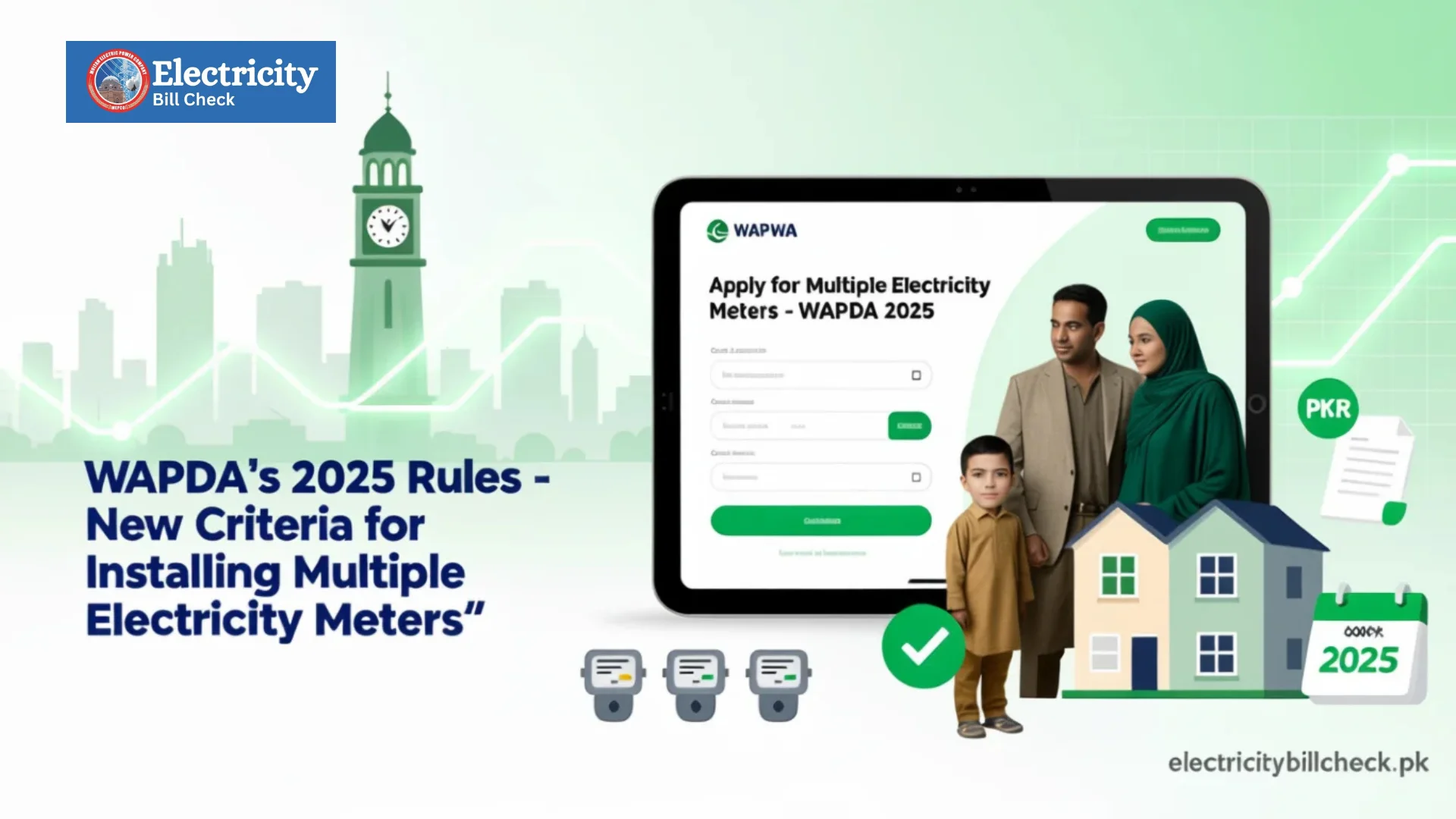
New rules announced by WAPDA in 2025 concerning the installation of multiple electricity meters bring about major reforms in handling the electricity connection, especially for residential and commercial properties with subdivided units. These new criteria for multiple meters are to promote fairness and proper billing among consumers and, in turn, prevent electricity theft. The revision of WAPDA policies in 2025 makes the installation of multiple electricity meters at a single address easy and to-the-point on the different criteria. The new WAPDA rules, 2025, state that multiple meters can be duly installed if the existence of a property consists of independently functioning units. The updates are to prevent abuse where unauthorized second or third meters might confuse billing issues. The policy is balanced between consumer convenience and regulatory oversight in view of protecting the entire energy distribution system.
When Can Multiple Electricity Meters Be Installed?
The new criteria multiple meters also clarify that they are only allowed in properties physically divided into distinct units. There should be:
- Independent entrances and exits.
- Exclusive kitchen and sanitary facilities.
- Separate internal electrical wiring and fuse boxes.
- Without these conditions, installing on the same property is prohibited. This is to ensure that meters correspond to legitimately separate consumers rather than being used to under-report consumption under a single consumer account.
Criteria for Applying for Multiple Meters
To legally qualify for installation according to the WAPDA’s new rules 2025, applicants must meet strict criteria demonstrating the legitimacy of subdivided units. The property must have legally approved subdivisions or separate extensions verified through certified documentation. This assures that the units are planned and built to operate independently. Each unit should function as a separate household or business entity. This includes having distinct entrances, kitchens, bathrooms, and electrical installations. An applicant can be an owner or lawful tenant, but must prove that every unit uses electricity separately and that shared utility use is not occurring.
Applicants must submit formal documentation, such as a certified layout or building plan from the local development authority or municipality. Proof of property ownership or rental agreements and affidavits confirming independent occupancy of each subdivision are mandatory. These documents collectively support the claim for helping WAPDA uphold compliance and reduce misuse where meters are installed to under-report consumption. This enforcement strengthens electricity distribution integrity, prevents fraud, and ensures that multiple meters are allowed only for genuine multi-unit setups.
Application Procedure for Installing Multiple Electricity Meters
The procedure for applying for it has been modernized for ease and transparency. Property owners or lawful occupants must first visit the nearest WAPDA or DISCO office or use WAPDA’s online services portal, now offered in some regions. They must submit a detailed building plan highlighting subdivided units clearly marked as independent, separate plots or residences. Alongside this, an applicant needs to provide a copy of their CNIC, proof of property ownership or valid rental agreement, latest utility bill receipts, and an affidavit asserting the separate use and residency of each unit. Once the application is submitted, WAPDA schedules an on-site inspection to verify the physical existence and segregation of units. This inspection is crucial to ensure compliance with conditions and to rule out any misrepresentation.
Following successful verification, WAPDA issues an approval for the installation of each requested meter, and relevant fees and deposits are communicated to the applicant. The installation process is then scheduled with the affected units accordingly. This transparent and thorough application process empowers consumers to legally obtain multiple meters and supports anti-theft measures under the new criteria multiple meters framework.
Exceptions for Multiple Meter Installation
WAPDA’s new policies put in place exceptions that may be granted even when a full degree of independence is absent amongst the subdivisions. Another primary exception is for those consumers with respect to heavy loads, that is, with a load exceeding 5KW. For those single entities requiring substantial power, such as industrial units or large houses, extra meters may be provided for load management purposes to avoid overload, thus ensuring safety.
In commercial undertakings like office blocks, shopping centers, and tenant buildings, these are required to measure consumption precisely and allocate costs accordingly to individual tenants or shops. Such cases are granted exemption from full physical subdivision, as billing needs to be perfect. Cluster metering may be applied for by recognized housing societies or gated communities with multiple plots. This allows the developer to manage consumption in one go among multiple units as per set standards.
Penalties for Wapda New Criteria
Unauthorized meter installations shall attract penal provisions:
- Immediate disconnection of illegal meters.
- Fines and surcharges are calculated for theft or under-billing.
- Possible legal prosecutions under the Pakistan Electricity Rules and NEPRA guidelines.
- The WAPDA team conducts routine audits and field inspections to check for misuse.
- Public awareness campaigns are aimed at educating consumers about following the WAPDA’s new rules 2025.
Benefits of Enforcing New Criteria for Multiple Electricity Meters
The rules bring several benefits:
- Fairness in electricity billing prevents cross-subsidization among consumers.
- Reduction in illegal electricity consumption provides revenue protection for the power utilities.
- Transparency through accurate metering gives the customer greater trust.
- Single meters ascertain a single consumer unit for an easy resolution of disputes.
- Helps the government in the efficient management of subsidies by targeting only eligible consumers.
Conclusion
The WAPDA’s new rules 2025 for the installation of multiple electricity meters lay down clear regulations that permit the installation of meters only when properties are lawfully divided into separate units. These regulations also apply when applying for a new connection, ensuring that every meter is issued under proper verification. Such measures aim to curtail electricity theft and misuse of subsidies to ensure billing fairness. The application is a lengthy process that requires documentation and rigorous inspections for compliance, even though some exceptions pertain to high-load consumers and commercial premises. All in all, these rules enhance transparency, fairness in billing, and efficient electricity distribution to the benefit of both consumers and utility providers.