FPA in Electricity Bill
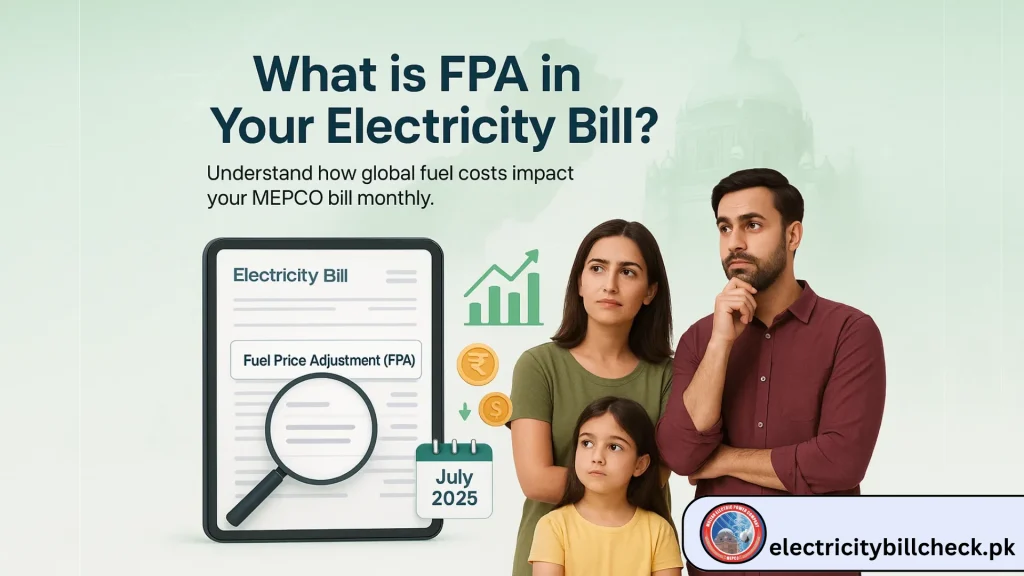
The Fuel Price Adjustment (FPA) is a constantly adjusted charge introduced in the electricity bills to accommodate changes in fuel costs that are necessary for the production of electricity. The cost of electricity generation varies from month to month since the power plants in Pakistan rely heavily on fossil fuels furnace oil, diesel and natural gas whose prices tend to fluctuate on the world market. The FPA in Electricity Bill serves as a regulatory means for passing the increased or decreased fuel prices directly to the consumers. That way, the tariffs for electricity reflect the actual costs and are not just fixed prices determined much earlier. Thus, the FPA prevents electricity producers from sustaining losses when there is an increase in fuel prices and offers fair billing mechanisms once there is a drop in fuel prices. The main function, therefore, is one of cost recovery and transparency lowering the electricity bill depending upon real-time fuel expenses.
What Does FPA Stand For?
Fuel Price Adjustment is what FPA stands for. The term is widely used in Pakistan’s power sector billing, particularly by all major distribution companies (DISCOs), including MEPCO, IESCO, LESCO, etc. It is a charge or rebate calculated monthly on the difference between the baseline fuel cost embedded into the tariffs and the actual fuel cost during the billing month. This charge has variable levels, reflecting the trends in international fuel prices and the generation mix, and thus forms an essential link in the billing framework.
What is FPA in the Electricity Bill?
The FPA in electricity bills represents a special item that is added as a charge or subtracted as a discount computed on the basis of fuel price trends. FPA is computed on the basis of consumption per unit (kilowatt-hour) and tends to change drastically from month to month. For example, if there is a spike in international prices for imported furnace oil due to geopolitical tensions or supply constraints, the FPA directs the increase in electricity bills to cover the extra costs. Conversely, should fuel prices fall, consumers would pay less owing to a discounted FPA.
In this way, the charges help the providers recover the cost of fuel without having to resort to a complete and complicated process of tariff revision, which is time-consuming and supervised by NEPRA.
Calculation of Fuel Price Adjustment (FPA)
Calculation of the FPA is based on a predefined methodology laid down by the regulatory authorities, like NEPRA:
- First, an announcement is made every month of the Fuel Price Information List (FIPL), which must include the current price listing and average fuel price for major fuels that are used in power plants (such as, but not limited to, furnace oil, HSD, and RLNG).
- Weighted average fuel cost deductions are therefore made based on the generation mixture (percentage share of fuel type in the total electricity produced).
- This average is compared with the base fuel cost established in the settlement tariff for the period.
- The charge or rebate for FPA for a consumer is thus the difference between the actual and the base, plus the number of units consumed.
- Additional components like operational costs, emission costs, or efficiency factors can also be sometimes included in the Elementary Fuel Cost (EFC) from which FPA is derived.
- Such a monthly adjustment will guarantee that consumers pay fairly based on current input costs as these costs are being levied without any flat rate, depending upon the determination of market fuel prices.
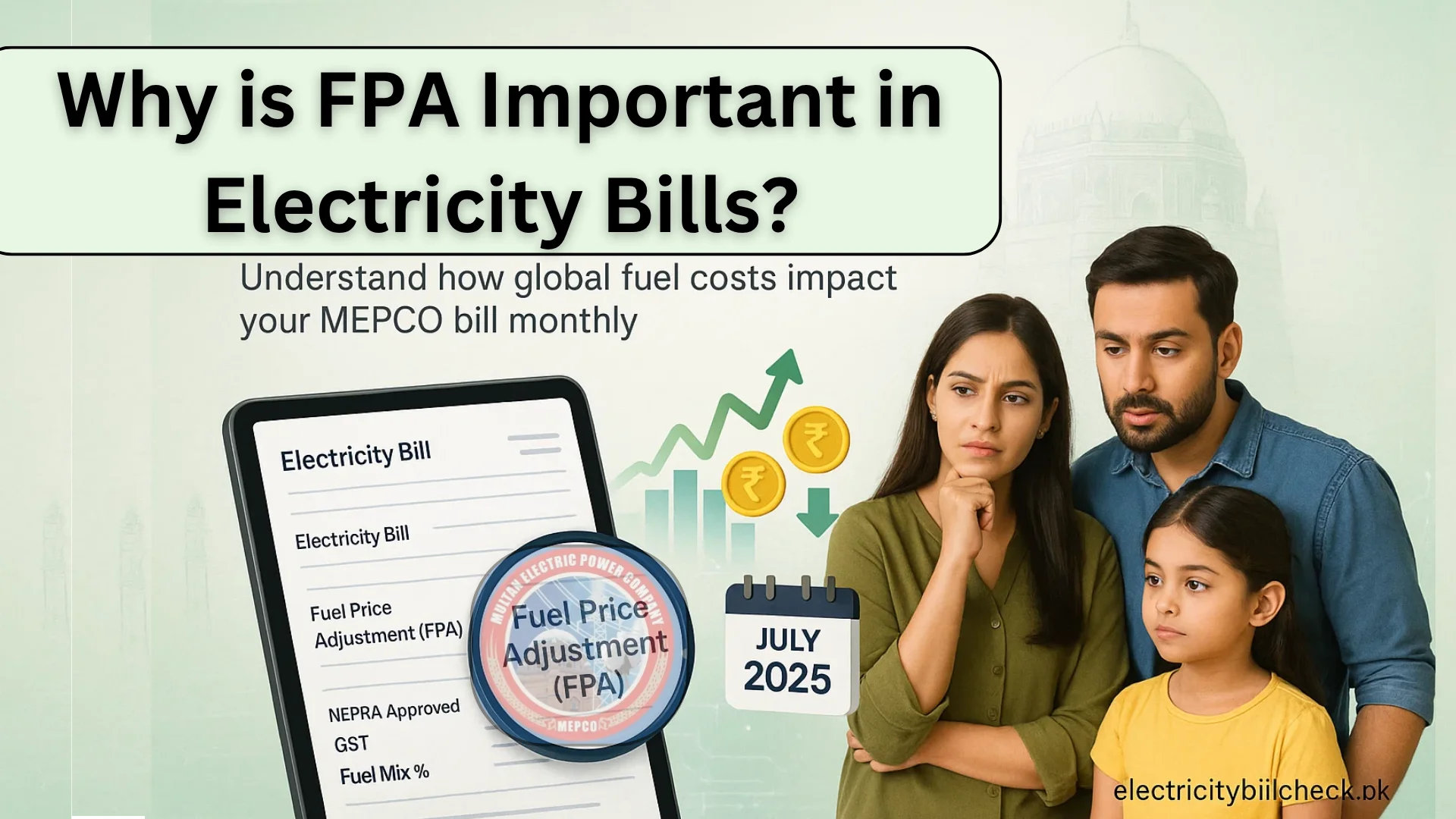
Why is FPA Important in Electricity Bills?
The importance of FPA can be stated as follows for different reasons for accurate Cost Reflection. It ensures that electricity bills reflect the real cost of fuel, and this is good for preventing any losses for power producers or charging unfairly those who buy. Flexibility Since global fuel prices are turbulent, FPA permits the electricity sector to adjust itself in real-time without waiting for tedious tariff revision exercises. It gives consumers visible insights into the way that international fuel prices affect their bills. NEPRA literally scrutinizes and approves all adjustments to the FPA, which thus offers a regulatory check that these charges are justifiable, fair, and based on factual data. Financial Viability FPA mechanisms ensure financial viability for power producers and distributors in a fluctuating fuel price environment, especially in the international market.
FPA Tax and Additional Charges
The important thing to be clarified is that FPA is not a tax but an adjustment charge. However, some of the components that may be included in electric bills also include:
General Sales Tax (GST): Incurred by the government on the total electricity bill, which includes FPA.
Electricity Duty: A kind of government tax that has to be imposed.
FC Surcharge (Financing Cost Surcharge): To cover costs relating to power sector financing or circular debt.
These, on the one hand, can be called taxes or surcharges, but FPA means price variations. Consumers typically misunderstand these components; however, FPA is more of a cost recovery tool rather than taxation.
Does FPA Affect Your Monthly Bill?
The FPA might make your monthly bill waver a lot even when there is no change in your consumption, attributable to factors such as:
Fuel Price Changes: Rising international oil or gas prices would raise FPA, thus raising your bill; lower it when prices fall.
Electricity Consumption: Since FPA goes per unit consumed, he who consumes more electricity bears more FPA.
Rate Category: These consumers’ household, commercial or industrial tariffs have different bases and generation mixes that bring along different ways that FPA is applicable.
Generation Mix: FPA sensitivity varies because of the share of fuel-based plants compared to hydel or renewable in the whole generation mix.
From these consumers, one can manage expectations in terms of such fluctuations in time and manage the use to control costs.
What Does NEPRA Do with FPA?
NEPRA plays a prominent role in regulation, giving public consultation when it reviews monthly reporting on fuel prices and generation mix numbers from power producers and distributors. It comes up with an FPA rate for a particular month, so as to treat pass-through charges fairly under actual fuel cost differences. Then it also resolves controversies/statutory matters over FPA, like declaring FPA illegal for a period by the Lahore High Court due to regulatory procedural blunders. NEPRA would publish FPA notifications and revenue collection guidelines to DISCOs, thus ensuring transparency and consumer protection.
Tips for Managing Bills with Considerations
To lessen the effects of the fluctuating:
Reduce consumption: Practice energy-saving habits and reduce excessive use.
Energy-Efficient Appliances: Install devices that consume less power to reduce the number of units consumed and hence charge under FPA. Avoid high electricity-sucking appliances.
Stay tuned: Watch the trend in global fuel prices and definitely from NEPRA, then forecast FPA increases.
Consider Renewables: Solar panels or other off-grid alternatives should decrease reliance on fuel-based systems, thus mitigating FPA impact.
Budgeting: Include expected fluctuations in the FPA forecast into household or business budgets to enhance financial planning.
Conclusion
FPA is the famous Fuel Price Adjustment, which causes transformations in bills in Pakistan depending on the tide of global fuel prices, which includes the cost of generation. Monthly adjusting the bills on this reality regarding fuel price restores transparency and fairness to both the consumers and the power producers, thus making the business financially sustainable. Though it causes fluctuation in the consumer’s bill sometimes, the consumers need not be worried, as this is well-regulated by the NEPRA and would gravitate towards diversified renewables that reduce affordability while opening up the market for the viability of the sector. Knowledge of this will enhance consumers’ interpretation of electricity bills, avoid or cut down on consumption, and prepare for any price changes in an unpredictable fuel market.