How to Save the MEPCO Electricity Bill?
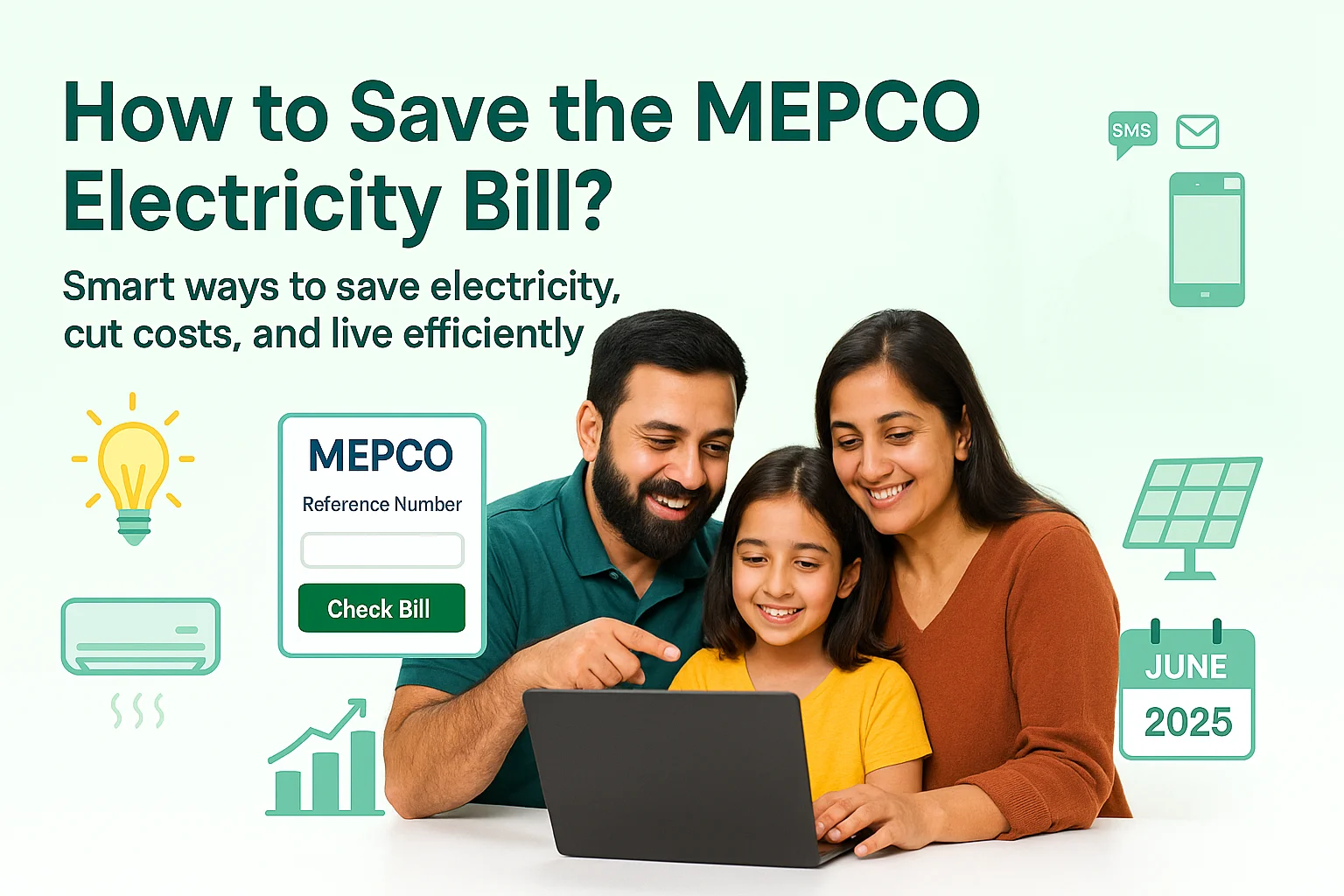
Saving your MEPCO electricity bill is an important step toward cutting household expenses and saving energy. As electricity rates have increased rapidly, it has pushed many consumers within the MEPCO network to start looking to save on bills related to practical measures applied toward using less energy. Every smart effort to save electricity bills starts with understanding one’s electricity usage. In the MEPCO bills, an example will be given in detail, such as how many turning units (kWh) are actually consumed, tariff rates depending on the consumption slabs, fixed charges, and taxes.
Most of the time, consumers do not know which appliance or habit adds high bill attributes. There will be monthly reports for the bill history to analyze if there are any unusual spikes in consumption that will suggest faults or behavioral changes. For example, if your bills spike in winter, it could mean that you are using your units more, for heaters or electric blankets. Having sounds for these trends will enable one to micro electricity savings efforts according to the real consumption, that is, at the highest use appliances or time slots.
Benefits of Learning How to Save on Your MEPCO Electricity Bill
Learning how to save electricity is more than just about monthly bill reductions. First, materials that save electricity lead to lasting savings, as utility rates will continue to rise with inflation. Second, energy conservation restricts pressure on Pakistan’s national grid, which suffers from load-shedding; even fewer people add to it during peak demand. Third, responsible use reduces carbon emissions, thus conserving the environment.
Reduced power consumption gives longer life to electrical appliances by minimizing overload or excessive runtime. Apart from this, saving energy will help build a sustainability culture where you are living today, as it benefits not only your community but also future generations.
Strategic Use of Appliances to Reduce Power Consumption
Appliances are usually behind most of the high bills from MEPCO. There is smart use and scheduling, which cuts the consumption of energy dramatically:
Air Conditioning Systems: Maintain temperatures between 24 to 26 degrees Celsius instead of colder settings that cause the most energy use. Clean filters periodically to maintain the efficiency of units.
Refrigerators: Do not overcrowd or keep the door open for too long. Keep temperature settings between 3 degrees Celsius and 5 degrees Celsius for the most effective cooling.
Water Heaters: Use only when necessary and consider timers or solar water heater options to improve efficiency.
Switch Off Unused Devices: Avoid the phantom load phenomenon by using chargers and completely unplugging devices when not in use.
Use Energy Saving Modes: Many modern appliances have energy-saving settings that help lower energy usage without sacrificing efficiency.
With these, Mepco electricity savings will be achieved effectively without compromising comfort and convenience.
Application of Energy Conservation Tips for Lights
Lighting controls a significant amount of energy consumption in households, especially in cities that significantly draw from MEPCO electricity. The traditional way of replacing incandescent bulbs with energy-efficient LEDs or CFLs is that the latter uses up to 80% less energy while lasting longer. It is best to keep curtains drawn and place workspaces closer to windows to benefit from natural sunlight.
Insulation of motion detectors will be used in hallways, bathrooms, and unused rooms, as light will turn off automatically without any activity, reducing unnecessary usage of lights. Moreover, using dimmers in living areas provides controllable lighting that minimally consumes electricity. Simple yet powerful energy-saving tips that can remarkably reduce your lighting electricity bill.
Improve Insulation Within Your House for Electricity Bill Savings
Quality insulation is the most important in reducing the dependence on cooling and heating appliances, which consume most of the electricity. Using insulation materials of high-grade quality for the walls and ceilings will ensure the stability in temperature inside the home. Weather sealing cracks around the doors and windows will still help to cut off the currently moving hot or cold air out or prevent fresh air from entering.
There are also thermal curtains or heat-reflective window films, which together cut sunlight penetration, thus helping to keep interiors cooler in summer and warmer in winter. These home changes will be an upfront investment but will save MEPCO bills in the long term by lowering overall energy demand.
Using Solar Energy for Electricity Savings
Solar power integration would allow consumers to save significantly on their electricity bills when the amount of energy taken from MEPCO is reduced. Solar photovoltaic systems make it possible to convert sunlight into electricity, which can be very useful for lighting, fans, and minor appliances, thereby reducing grid dependency. Even diminutive solar water heaters are enough to cut down energy consumption in heating water.
The government of Pakistan, including provincial authorities, runs great schemes in the MEPCO areas to provide attractive subsidies and financing offers to house owners adopting solar technology for cost-effective and environmentally friendly monthly bill savings. Solar is a long-term solution to Mepco’s savings goals.
Adopting Conscious Habits for Electricity Saving
Daily habits will combine to make a big difference in the overall power savings:
- Switch off electricity and lights without hesitation once exiting a room.
- Open windows and use a fan on less hot days instead of running air conditioning.
- Do not overcharge devices; unplug them after they are completely charged.
- Utilize the oven and stovetop minimally by cooking correctly in bulk or by using smaller devices.
- No more electric dryers, but also climate-dry the clothes naturally.
- Set the wash and dishwashing times so that they coincide during off-peak hours to save on dynamic tariffs.
- Family members spread awareness about these conscious habits, which amplify positive scoring on the consumption of electricity and MEPCO bills.
Routine Cleaning and Maintenance of Appliances for Performance Efficiency
A poorly maintained appliance eats up a lot of power. Dusty filters in air conditioners compel compressors to work harder. Dirty condenser coils work less efficiently in refrigerators. More electricity is consumed through old wiring or by faulty thermostats. Schedule periodical cleaning, servicing, and repairs. Making such a practice means their appliances are maintained in top shape, ensuring maximum operation with no energy wastage, a vital part of an energy-saving tips scheme to lower your MEPCO electricity bill.
Energy-Efficient Appliances for MEPCO Electricity Save
The energy-efficient models must naturally be prioritized when buying new household or office appliances to save electricity and reduce costs. These include inverter-type air conditioners, high-star-rated refrigerators, and LED lights. Costing less to operate daily, energy-efficient appliances consume less electricity than conventional models—sometimes even up to 30–50% less. Although they are often more expensive to buy than traditional ones, their ability to save electricity helps reduce MEPCO bills and offsets the initial cost within a few years, adding comfort and long-term savings.
Conclusion
The behavior changed, coupled with the intelligent use of appliances. An understanding of your behavioral pattern, through efforts at practical energy-saving measures, fitting energy-efficient appliances, and keeping an eye on the usage courtesy MEPCO’s digital tools, as well as investing in renewable solutions such as solar, would go a long way in reducing power consumption while lowering your monthly bills. Little micro-habits such as switching off inactive lights, performing high-energy tasks at off-peak times, and regular maintenance of appliances would take you further in saving electricity without compromising comforts. Going even further will involve capitalizing on incentives offered by the government to make that transition easy towards an energy-conscious lifestyle.